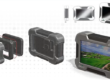

Electronic Product Design is the foundation of transforming innovative concepts into reliable, high-performance, and market-ready products. From connected IoT devices and embedded systems to consumer electronics, medical devices, industrial automation, and smart hardware, successful products require a structured engineering approach that balances innovation, functionality, manufacturability, and regulatory compliance.
Modern electronic product development goes far beyond circuit design. It involves electronic hardware development, product engineering, embedded software development, PCB design, firmware engineering, hardware prototyping, and system integration to create products that meet performance, reliability, and cost objectives. Whether you’re a startup building a Minimum Viable Product (MVP) or an established OEM developing next-generation electronics, every stage of the development lifecycle influences product quality, scalability, and time-to-market.
A successful design process also includes design verification, product validation, component selection, power management, thermal optimization, and compliance with industry standards such as FCC, CE, RoHS, and ISO. By incorporating design for manufacturability (DFM), design for testability (DFT), reliability engineering, cost optimization, and manufacturing readiness from the early stages, businesses can reduce development risks, accelerate production, and improve long-term product performance.
Whether you are seeking electronic product development services, custom hardware development, or end-to-end product engineering support, understanding the core principles of the electronics design lifecycle is essential for delivering innovative, scalable, and commercially successful products.
In this blog, we’ll explore eight essential considerations that help engineers, product developers, and businesses design electronic products that are functional, reliable, cost-effective, scalable, and ready for successful manufacturing and market launch.
Essential Factors in Successful Electronics Product Design
-
Define User Requirements, Product Specifications and Market Use Cases
Before diving into circuits or code, clearly define what your users need. This includes:
- Identifying the target audience: Understand their pain points, technical literacy, and expectations.
- Use case mapping: Visualize real-world scenarios where your product will be used.
- Develop a PRD: Product Requirements Document
-
Optimize Product Performance, Embedded Systems and Hardware Architecture
At the heart of every electronic product is its ability to perform efficiently under intended conditions.
- Choose the right microcontrollers, sensors, components and modules for the job.
- Plan for real-time processing, response times, and data handling capabilities.
- Consider battery life, especially for portable or IoT-based devices.
-
Design for Manufacturability (DFM)
A functional prototype is just the beginning. The real challenge is designing for mass production.
- Use standardized components to reduce sourcing issues.
- Design mechanical components with tooling in mind.
- Align with your manufacturer’s capabilities from the beginning.
Why it matters: A well-optimized design lowers per-unit costs and accelerates time to market.
-
Ensure Regulatory Compliance, Product Safety and Industry Certifications
Electronic devices must comply with regional and international regulations.
- Follow FCC (US), CE (EU), RoHS, and WEEE directives.
- Document your testing processes and retain records for audits.
- Consider EMC (Electromagnetic Compatibility) and safety standards during the early design stage.
Tip: Failing to meet compliance standards can result in market rejection and legal challenges.
-
Plan for Power Efficiency
Power consumption is a top concern for portable electronics and IoT devices.
- Use low-power microcontrollers and efficient power management ICs.
- Include sleep modes and energy harvesting where possible.
- Optimize firmware to limit unnecessary processing.
Why it matters: Power-efficient products have longer battery life, lower operational costs, and are more environmentally friendly.
-
PCB Design, Component Placement and Signal Integrity Optimization
Your PCB (Printed Circuit Board) is the heart of your electronic product.
- Place components strategically.
- All work should be done by an experienced electronic engineer
-
Prioritize Reliability and Durability
Products should not only work well in labs but also withstand real-world environments.
- Use robust enclosures that protect against moisture, dust, and impacts.
- Validate durability with drop tests, vibration tests, and temperature cycling.
- Select components rated for the environmental conditions of your use case.
-
Design for Firmware Updates, Cybersecurity and Future Scalability
Your electronic product should be future-proofed for updates.
- Include support for updates.
- Prevent firmware tampering.
- Document the firmware structure for future iterations or debugging.
Cost & Timeline in Electronics Product Design
Designing electronics involves multiple phases that vary in time and cost depending on complexity. A rough roadmap might look like:
- Concept & requirements gathering: 1–2 weeks
- Schematic & component selection: 2–4 weeks
- PCB layout & prototype build: 3–6 weeks
- Testing & regulatory compliance: 2–8 weeks
- Firmware development & optimization: 2–6 weeks
- Manufacturing hand-off: 2–4 weeks
Key cost drivers include component costs (especially rare or high-precision parts), custom vs. standard parts, the number of prototype iterations, compliance testing for safety and EMC, and firmware complexity.
Common Mistakes in Electronics Product Design (and How to Avoid Them)
- Using low-quality or non-standard parts — While it may seem like a cost-saving measure, this often leads to failures under stress or unavailable replacements later. Use trusted, well-rated components and verify sources.
- Neglecting thermal management early — Poor PCB layout or enclosure design can cause overheating. Plan for heat dissipation and consider cooling solutions from the start.
- Underestimating power / battery requirements — Many electronics projects fail to meet battery life expectations. Simulate power usage, implement low-power modes, and choose efficient microcontrollers.
- Skipping design for manufacturability (DFM) — Ignoring assembly constraints can increase production costs or lead to failures. Engage manufacturing partners early and consider assembly, PCB panelization, and component placement constraints.
Case Study: Cost Reduction through Early DFM Considerations
- Scenario: A hardware startup was developing a wearable IoT health tracker. Initially, the design used custom mechanical components and rare electronic parts.
- Problem: Early prototypes were expensive to produce, and manufacturing scalability was a concern.
- Solution: By consulting a DFM expert early in the process, the team replaced non-standard parts with readily available components and adjusted the mechanical design for easier assembly.
- Outcome: Production costs dropped by 30%, prototypes were delivered faster, and the product was easier to scale for mass manufacturing.
Takeaway: Early consideration of manufacturability saves money, reduces redesign cycles, and accelerates time-to-market.
Case Study: FCC Compliance Failure due to Poor PCB Shielding
- Scenario: A consumer electronics company launched a smart home sensor designed for the US market.
- Problem: The initial prototype failed FCC electromagnetic interference (EMI) tests due to inadequate PCB shielding and layout issues.
- Solution: The design team redesigned the PCB with proper grounding, added shielding, and conducted pre-compliance testing.
- Outcome: The product eventually passed regulatory testing, but the delay pushed back the market launch by 3 months and increased costs.
Takeaway: Regulatory compliance cannot be an afterthought. Integrating EMC considerations early in PCB design prevents costly delays and recalls.
Trends in 2026 Electronic Product Design
The electronics industry evolves rapidly. Staying updated with trends allows designers and businesses to future-proof products and remain competitive. Key 2026 trends include:
AI Integration in Electronics
- Devices are increasingly smart, leveraging AI for tasks like predictive maintenance, adaptive firmware, and intelligent automation.
- Example: Smart appliances that self-optimize energy use or industrial sensors predicting component failures.
- Benefit: Enhances product value, improves user experience, and enables new services.
Edge Computing and Low-Power AI Chips
- Processing data on-device rather than sending it to the cloud reduces latency and network dependency.
- Low-power AI chips help maintain performance while minimizing energy consumption.
- Benefit: Ideal for IoT, wearables, and autonomous devices where speed and efficiency are crucial.
Sustainability and Eco-Friendly Design
- Designers are choosing recyclable materials, energy-efficient components, and modular designs to reduce e-waste.
- Example: Electronics built with biodegradable plastics or components that can be easily upgraded.
- Benefit: Aligns with regulatory pressures, reduces environmental impact, and appeals to eco-conscious consumers.
Design for Circular Economy
- Products are being designed to be repairable, modular, and upgradable.
- Example: A modular drone where individual components like the camera, battery, or sensors can be replaced or upgraded without discarding the entire device.
- Benefit: Extends product lifecycle, reduces waste, and lowers long-term costs for users.
Ready to Build Your Electronic Product?
From startups building MVPs to OEMs developing next-generation hardware, IDP delivers complete electronics product development services.
Speak with an Electronics Design Expert
Final Thoughts
Effective Electronic Product Design is more than just putting components together. It requires carefully balancing user needs, technical feasibility, cost-efficiency, and regulatory adherence. Whether you’re building wearables, smart home devices, industrial sensors, or consumer electronics, applying these 8 considerations will increase your chances of success.
By incorporating industry best practices and staying updated with the latest trends, your team can reduce time to market, minimize development risks, and deliver innovative products that delight users.
Have a Great Idea- Give us a call
At IDP, we help startups and businesses design smarter, build faster, and confidently launch. From concept to prototype to full-scale production—our experts are here to guide you every step of the way.
Ready to begin:
Let’s connect at https://innovativedesignproducts.com/get-started/ or call Holly Grantham or Jennifer Rivkind at 949.748.1902 to discuss your project!
FAQs
Q1. What are the key considerations for effective electronic product design?
A: Key considerations include defining user requirements, prioritizing functionality and performance, designing for manufacturability (DFM), ensuring regulatory compliance, planning for power efficiency, optimizing PCB layout, ensuring reliability and durability, and incorporating firmware upgradability.
Q2. Why is regulatory compliance important in electronic product design?
A: Regulatory compliance ensures that your electronic product meets legal and safety standards such as FCC, CE, RoHS, WEEE, and EMC directives. Non-compliance can lead to market rejection, legal issues, or costly recalls.
Q3. How does IDP help businesses with electronics product design?
AIDP provides end-to-end support for electronic product design, from defining user requirements to prototyping and full-scale production as a trusted prototyping company. Their expertise ensures products are functional, market-ready, and compliant with industry standards.
Q4. How can power efficiency and PCB layout affect product performance?
A: Power-efficient designs extend battery life and reduce operational costs, while strategic PCB layout ensures optimal signal integrity, thermal management, and reliability, directly impacting overall product performance.
Q5. Why should companies partner with IDP for electronics product design and prototyping?
A: Partnering with IDP gives businesses access to skilled engineers, designers, and prototyping experts who ensure innovative, reliable, and scalable electronic products, helping reduce development risks and accelerate time-to-market.