
Creating a prototype with the best design and functionality possible is an important step in the product development process. We hope that these inventions will someday transform into viable, usable products. Therefore, realizing your product ideas with good, working prototypes is a significant part of the course of product development. This part is where the inventors must choose a product development company who can turn their ideas into real products. Before getting a Beta prototype, which is often used for marketing purposes and raising money for production, there are several important steps which we will outline below.
What is invention design? (concept development, product engineering & industrial design explained)
Invention design is the creative and technical process of transforming a new idea into a practical, manufacturable product. It combines concept development, engineering, usability, and aesthetics to ensure the invention is both functional and marketable. An effective invention design process bridges the gap between innovation and commercialization—helping inventors move from idea sketches to working prototypes that can be patented, tested, and manufactured.
Step-by-step process of invention prototype designing – from idea validation to working model
-
Concept use-cases and general design planning
It is important that the inventor is able to define their product on paper, before seeking a product development company. Certainly, a good product development firm will be able to help you better define your product and its requirements, but you should have a good idea of what you are trying to develop beforehand.
An excellent place for the customer to start is to define a use-case: what does the user of the product do first, second and third? How exactly is it being used? Envisioning how the product will work in the hands of the end-user can be very helpful in defining the product.
Additionally, you can sketch out a general idea of how your product looks, including approximate sizing. These two steps will help you when you present your idea to a product development company.
Once you have completed these initial steps, you can confidently approach a invention development company, who will help you realize your dream. The product development company can use these as a baseline for a product requirements document, which is important before jumping into any design.
-
Design and engineering
Once your idea is studied and understood by the product design team, they can design your product and present you with a design that encapsulates your product vision. The team will be able to flush out your design, while offering areas of improvement from an aesthetic and functionality standpoint.
The development company will then be able to design and engineer its features, include those features related to its appearance and functionality. Once a final agreed to design has been selected and engineered, they can move onto creating a rough Alpha prototype.
-
Building an alpha prototype
The next step is to convert the prototype design into an Alpha Prototype.
Building the prototype gives you the tool to test your product, document your testing experience and feedback. Careful and thorough testing of an Alpha prototype should be done, and a list of changes and improvements well documented to understand the further goals and uses of the product. The company can make engineering improvements, and ultimately produce a Beta prototype.
-
Building a beta prototype
A Beta Prototype will be engineered and made based on the feedback and improvements that arise from Alpha Prototype testing. A lot is learned in the Alpha Prototype process that can be improved and perfected in a Beta Prototype. As mentioned, a Beta prototype is a useful tool in marketing and fundraising. Equally importantly, The Beta or Theta prototype is used as a sample for factories to understand and quote the production or mass production of the new product.
Testing both Alpha and Beta prototypes is important to understand and improve a product, with the ultimate goal of manufacturing.
Why you need an invention prototype before manufacturing and mass production
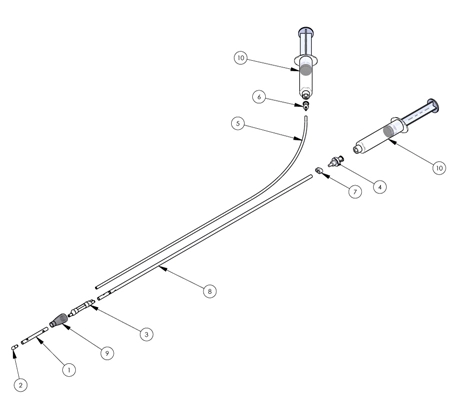
Creating an invention prototype is not just a formality—it’s an essential step before moving into mass production. Many first-time inventors believe they can skip prototyping to save time or money, but this often leads to costly mistakes later. Here’s why prototyping is so important:
-
Proof of concept with working models
A prototype demonstrates that your idea is more than just a sketch on paper. By developing a working model, you can prove that the invention can be designed, built, and function as intended.
-
Identify design flaws early
Even the most brilliant ideas often need adjustments. Prototyping allows you to test usability, durability, and functionality before investing in expensive tooling or large production runs.
-
Investor and stakeholder confidence
If you plan to pitch your invention to investors, a functional prototype or working model builds credibility. Stakeholders want to see and interact with a tangible product, not just hear about it.
-
Cost savings in manufacturing
Finding and fixing problems at the prototype stage is far less expensive than discovering them after manufacturing begins. Rapid prototyping technologies, like 3D printing, also make this step faster and more affordable.
-
Patent and intellectual property support
A prototype can strengthen your patent application by clearly showing the novelty and utility of your invention.
For inventors in the USA, ensuring compliance with standards like FCC, UL, or FDA (for medical device prototypes) is critical. Prototypes help validate design before certification and mass production in US markets.
Types of invention prototypes in product development and hardware engineering
Not all prototypes are the same. Depending on the stage of your invention and your goals, you may need different types of prototypes:
-
Functional prototype / bench test prototype for performance testing
- Purpose: To test how the invention actually works in real-world conditions.
- Often built using rapid prototyping methods like 3D printing, CNC machining, or off-the-shelf components.
- Helps inventors gather feedback on usability and performance.
-
Alpha prototype for internal testing and design refinement
- Purpose: First working model created for internal testing.
- Focus: Functionality, performance, and discovering flaws.
- Often rough in appearance but proves the core concept.
-
Beta prototype (Pre-market testing prototype for user feedback & real-world validation)
- Purpose: A refined version built after Alpha testing feedback.
- Focus: Usability, manufacturability, and presentation.
- Often used for investor demonstrations, crowdfunding campaigns, and discussions with manufacturers.
-
Production prototype / Pre-production sample (Manufacturing validation & DFM optimization model)
- Purpose: Final stage before mass manufacturing.
- Created using the same methods and materials as the final product.
- Used for certifications, regulatory approvals, and scaling to production.
Many inventors make avoidable errors that slow down their journey or increase costs. Here are the most common mistakes—and how to avoid them:
- Skipping the Prototype Stage
- Mistake: Jumping straight into manufacturing without testing.
- Solution: Always validate your concept with a functional prototype or basic working model before scaling.
- Focusing Too Much on Appearance Too Early
- Mistake: Spending money on how the product looks before testing if it works.
- Solution: Prioritize functional prototypes in the early stage; refine aesthetics later.
- Overcomplicating the First Prototype
- Mistake: Trying to build a perfect version immediately.
- Solution: Start with rapid prototyping methods to create simple, testable models.
- Not Documenting the Process
- Mistake: Failing to record design changes, testing results, and feedback.
- Solution: Keep detailed notes and photos for patents, investors, and manufacturing partners.
- Choosing the Wrong Development Partner
- Mistake: Working with firms that don’t specialize in invention prototyping.
- Solution: Select a invention development company experienced in working models and functional testing.
- Ignoring Cost and Manufacturing Feasibility
- Mistake: Designing a prototype that is too expensive or impractical to mass-produce.
- Solution: Use rapid prototyping for early versions and refine designs with scalability in mind.
- Failing to Test with Real Users
- Mistake: Relying only on personal judgment instead of end-user feedback.
- Solution: Test working models with target users before finalizing the design.
Regulatory and compliance tips for US inventors – FDA, FCC and product safety requirements
When developing invention prototypes in the USA, ensuring compliance with relevant standards is essential to streamline production and market launch. Here’s how inventors can prepare:
-
FDA (Food & Drug Administration) – medical device prototypes
-
For medical device inventions, early prototype testing should follow FDA guidance on design controls and safety requirements.
-
Maintain detailed documentation of design iterations and testing results to support premarket submissions.
-
-
UL (Underwriters Laboratories) – electrical safety
-
Electrical products should meet UL safety standards during prototyping to identify risks before mass production.
-
Conduct functional and durability tests to ensure compliance.
-
-
FCC (Federal Communications Commission) – electronics and connectivity
-
Products with wireless, RF, or electronic communication features require FCC compliance.
-
Test prototypes for emissions and interference issues early to avoid delays during certification.
-
-
CE marking for international distribution
-
Even US inventors planning for global markets should consider CE compliance.
-
Use prototypes to verify that design and functionality meet European safety, health, and environmental standards.
-
Tip: Engaging an IOT product development company experienced with US regulatory standards can save time and reduce costly revisions.
Invention prototypes: in-house vs. outsourced product development for US inventors and startups
| Factor | In-House Prototype Development | Outsourced Prototype Development (e.g., IDP) |
|---|---|---|
| Control | Full control over design and IP | IP protected via NDA but managed by experts |
| Expertise | Requires skilled engineers and labs | Access to specialized prototyping engineers and facilities |
| Cost | High upfront investment in tools, staff, and materials | Lower upfront costs; pay per project scope |
| Speed | Slower; dependent on in-house bandwidth | Faster; proven processes and experienced teams |
| Scalability | Limited by internal resources | Easily scaled for multiple prototypes or iterations |
| Compliance Support | Must research standards independently | Guidance for FDA, UL, FCC, and CE compliance during prototyping |
| Time-to-Market | Longer ramp-up | Shorter; proven workflows for rapid iteration |
Tip: US inventors often choose outsourcing when they want faster development, regulatory guidance, and cost efficiency without compromising quality.
Invention prototype cost and timeline overview – budget planning, engineering costs and manufacturing readiness
Understanding the costs and timelines associated with each stage of invention prototyping helps inventors plan budgets and schedules effectively. Costs vary depending on complexity, materials, and functionality, while timelines are influenced by testing, revisions, and manufacturing readiness.
-
Functional Prototype ($5,000 – $15,000, 2–4 weeks):
This is the earliest working model used to test basic functionality. Typically produced using rapid prototyping methods such as 3D printing or CNC machining, it allows inventors to validate core concepts and gather initial user feedback. The focus is on function rather than aesthetics. -
Alpha Prototype ($10,000 – $25,000, 4–8 weeks):
The first complete internal version of the product. This prototype focuses on functionality, usability, and performance testing, helping to identify flaws early. Alpha prototypes often undergo multiple iterations based on testing results before moving to the next stage. -
Beta Prototype ($15,000 – $40,000, 6–10 weeks):
A refined version built after Alpha testing feedback. Beta prototypes are often used for investor presentations, crowdfunding campaigns, and marketing demonstrations. They focus on user experience, manufacturability, and aesthetics while remaining cost-effective for testing purposes. -
Production Prototype ($20,000 – $50,000+, depending on complexity):
This is the final pre-production model, created with materials and manufacturing processes identical to the final product. It is used for regulatory compliance, certifications, and scaling for mass production. Production prototypes ensure that the final product is manufacturable at scale without surprises.
Emerging trends in invention design and rapid prototyping – 3D printing, AI-driven design and smart product innovation
The landscape of invention design and prototyping is evolving rapidly, driven by technological advancements and market demands. Inventors should consider these trends to stay ahead: Advanced rapid prototyping techniques (3D printing, CNC machining, and injection molding) allow quick iterations and testing. Digital twins, which are virtual replicas of physical products, enable engineers to simulate performance, identify issues, and refine designs before manufacturing begins.
According to Statista, the US electronics and medical device markets are expected to grow significantly in the next decade. Structured invention prototype development is crucial for inventors and startups targeting these industries in the USA.
Final words
Prototyping is a highly iterative and strategic approach within modern product design, forming the backbone of successful invention idea validation and commercialization. From early-stage concept development—supported by market research, patent search, and a secure disclosure agreement—to filing a patent application, each step in the development process ensures your concept is protected and viable. Through rapid prototyping, 3D printing, and advanced prototype design, teams can build a prototype that reflects both innovation and practicality, whether improving existing products or creating entirely new solutions.
A skilled team specializing in invention engineering, industrial designed solutions, and product development can transform initial sketches or CAD models into functional prototypes that simulate real-world performance. This refined prototype ultimately evolves into a final product, supporting scalable manufacturing, cost efficiency, and a successful transition from concept to market-ready innovation.
Plan for at least two to three prototyping iterations, incorporating user testing, engineering validation, and design refinements, before presenting your product to investors or moving into mass manufacturing. Thorough prototype testing, documentation, compliance checks, and quality assurance are essential to reduce risks, improve product reliability, and deliver a commercially viable, high-performance solution in today’s competitive innovation landscape.
Ready to bring your invention to life?
At Innovative Design Products (IDP), we specialize in transforming new ideas into fully functional invention prototypes that are ready for patenting, testing, and production.
Contact us today to start your invention design journey with expert engineers and product developers in the USA.
FAQs
1. What is the process of designing an invention prototype?
At Innovative Design Products, the process of designing an invention prototype begins with understanding your idea and its purpose. We help inventors refine their concept into sketches or 3D CAD (Computer-Aided Design) models using precise CAD Development that clearly captures the product’s features, design, and materials. Our engineers then optimize these models for usability, durability, and manufacturability. Once ready, we use advanced techniques like 3D printing, CNC machining, injection molding, or silicone casting to build a physical prototype. This prototype is tested for design accuracy and performance before moving toward full-scale production.
2. Why do inventors need prototypes?
Prototypes allow inventors to turn ideas into tangible models. They play a critical role in validating functionality, testing performance, and identifying improvements early in the process. A prototype also helps attract investors, file stronger patents, and clearly communicate the product concept to manufacturers. Without a prototype, it’s challenging to evaluate real-world usability or advance to mass production confidently.
3. What materials are commonly used to make prototypes?
The choice of material depends on the invention’s design and purpose. Commonly used materials include plastics like PLA or ABS for cost-effective prototypes, metals such as aluminum and stainless steel for durable models, and silicone or rubber for flexible products. In advanced stages, production-grade materials may be used to create prototypes that closely resemble the final product.
4. How long does it take to build a prototype?
Prototype timelines vary depending on complexity. Simple prototypes can often be completed within 2–4 weeks, while more advanced inventions with electronics or multiple moving parts may take several months. Rapid prototyping techniques like 3D printing can speed up this process significantly, making it easier to test and refine your design quickly.
5. How much does it cost to develop an invention prototype?
At Innovative Design Products, we tailor prototype development costs to each project. Simple prototypes may cost under $10,000, while more advanced ones with electronics or complex engineering typically range from $30,000 to $60,000. Production-ready prototypes designed for large-scale manufacturing can exceed $100,000. Since every invention is unique, we provide customized quotes to match your specific design requirements.
6. Can I patent my idea before creating a prototype?
Yes, you can file a patent with detailed drawings and descriptions of your invention, even if a physical prototype hasn’t been built. However, having a prototype strengthens your application by providing proof of concept and clarifying design features. Many inventors prefer building at least a preliminary prototype before filing to ensure accuracy in their patent documentation.
7. What is the difference between a prototype and a final product?
A prototype is an early version of your invention created to test usability, functionality, and design. It may use different materials or simplified processes compared to the final product. The final product, however, is mass-produced, fully refined, and meets market standards for safety, durability, and user experience. At Innovative Design Products, we help bridge the gap between early prototypes and production-ready products.
8.How does invention development turn an idea into a working prototype?
Invention development starts by refining a raw idea into clear design requirements, sketches, and 3D CAD models. Engineers evaluate functionality, usability, and manufacturability to ensure the concept can work in real-world conditions.
These digital designs are then converted into physical prototypes using methods such as 3D printing or CNC machining. The prototype is tested and improved, transforming the idea into a functional, production-ready concept.
9. What role does invention design play in successful product development?
Invention design is the foundation of turning an idea into a successful product. It focuses on creating the right balance between functionality, appearance, user experience, and manufacturability. A strong invention design ensures the product solves a real problem while being practical to produce and appealing to customers. At Innovative Design Products, our invention design process includes concept sketches, 3D CAD modeling, engineering analysis, and prototype refinement to help inventors move confidently from idea to market-ready innovation.
10. Who Can Help Develop My Product Idea Into a Prototype?
A professional product development company, such as IDP, can help turn your idea into a working prototype by handling concept design, engineering, prototyping, testing, and manufacturing preparation. An electronic product design company can also support electronics development, PCB design, embedded systems, and hardware integration. These companies typically provide services such as industrial design, CAD engineering, electronics development, rapid prototyping, and prototype manufacturing to help inventors, startups, and businesses bring products to market.

